
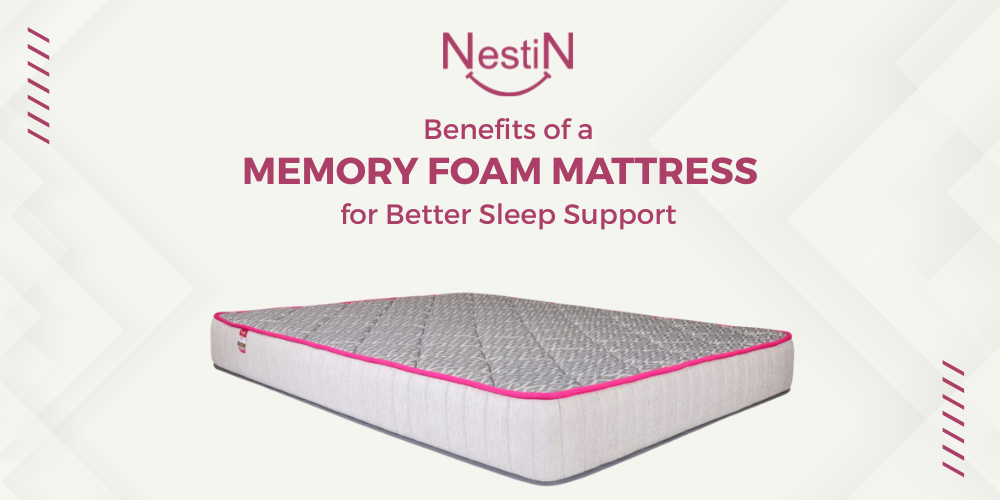
When people talk about better sleep, they often talk about routines — earlier bedtimes, less screen time, calming teas, dim lights. All of that can help. But the body still comes back to one basic question every night: what are you sleeping on?
A mattress can either support sleep or quietly work against it. And for many people, memory foam offers a sleep experience that feels more adaptive, more comfortable, and more supportive than they expected.
The appeal of memory foam lies in the way it responds to the body. It doesn’t just sit there. It adjusts. It contours. It helps distribute weight in a more balanced way. For sleepers who deal with pressure points, shared beds, or joint sensitivity, that can make a real difference.
It contours to the body for pressure relief
One of the biggest benefits of memory foam is how it shapes itself around the sleeper. Instead of pushing back too aggressively, it adapts to areas like the shoulders, hips, and lower back. This can help reduce concentrated pressure and create a more cradled, stable sleep position.
That is especially valuable for side sleepers, who often place more pressure on the shoulders and hips during the night. A well-made ortho memory foam mattress can help support these areas more gently while still maintaining structure.
For people who wake up feeling sore even after spending enough time in bed, pressure relief is often the missing piece.
It reduces motion transfer for shared beds
Anyone who shares a bed knows how disruptive movement can be. One partner turns, sits up, or gets out of bed, and the other feels the ripple. Over time, these small disturbances can fragment sleep.
Memory foam is popular in shared beds because it tends to absorb movement rather than spread it across the mattress. That makes it easier for couples to sleep with fewer interruptions.
For a couple choosing between a queen size latex mattress and a memory foam option, the decision often comes down to preferred feel. Latex may feel more buoyant and responsive, while memory foam may feel more contouring and motion-absorbing.
It supports even weight distribution
A mattress that distributes body weight more evenly can help reduce strain and improve overall comfort. This matters for people who sleep in one position for long hours, as well as for those with mild body aches or pressure sensitivity.
Even support helps the body relax more fully. When certain areas are not overburdened, sleepers tend to shift less and settle better.
That is why memory foam has become part of the latest mattress technology conversation. It addresses comfort not just through softness, but through smarter body response.
It adapts to the sleeper
Memory foam is often appreciated for its adaptive feel. It responds to body shape and pressure in a way that can make the bed feel more personalized. This is why many people describe memory foam sleep as enveloping or body-aware.
Some sleep products also combine foam support with cooling-focused additions. A cooling gel memory foam layer, for instance, may help balance comfort with temperature management. A memory foam pillow cooling gel can complement that experience by supporting the head and neck while reducing excess warmth.
For those who enjoy the contouring quality of foam but worry about heat, these cooling additions can be worth considering.
It can be ideal for joint sensitivity
Sleep can become difficult when joints feel tender, stiff, or easily irritated by pressure. In such cases, a mattress that cushions rather than presses can be especially helpful.
An ortho memory foam mattress may be suitable for sleepers who want a softer pressure response without giving up overall support. It can offer a gentle feel that still helps maintain comfort through the night.
That said, memory foam is not the only option. Some people compare it with a pure latex mattress, natural latex foam mattress, or latex pillows because those materials can also provide pressure relief with a more responsive feel.
It offers lasting support when well-made
A quality mattress should continue to perform over time. Good memory foam is designed to resist early wear better than low-quality foam alternatives. While every mattress has a lifespan, choosing a well-constructed one helps reduce the chances of premature sagging and uneven support.
This is where brand quality matters. A thoughtfully designed nestin mattress can offer a better long-term sleep experience than generic options that prioritize price over structure.
And of course, the full setup matters. A good pu foam pillow, latex pillow, or gel pillow, paired with practical bedding from nest bedding, can improve overall comfort and complete the sleep system.
Choosing memory foam for modern homes
Today’s homes often need products that are both comfortable and practical. Some customers may want their main bed to feature memory foam, while also keeping a tri folding mattress, 3 fold mattress, foldable mattress double bed, or soft foldable mattress for guests or flexible use.
That mix works well, especially in compact homes where multifunctional living matters. Brands that understand modern household needs rom primary mattresses to guest bedding and even smart furniture like a sofa without armrest tend to serve customers more meaningfully.
Is memory foam right for everyone?
Not always. Some sleepers prefer the springier feel of latex. Others want the firmer structure of coir-based support. A few may enjoy the bounce of an ortho spring mattress more than the contour of foam.
But for those looking for pressure relief, movement control, adaptive support, and body-responsive comfort, memory foam remains a strong contender.
The best mattress is the one that helps your body feel supported, your sleep feel uninterrupted, and your mornings feel lighter.
FAQs
What are the main benefits of memory foam?
Memory foam offers pressure relief, reduced motion transfer, adaptive contouring, and even weight distribution.
Is memory foam good for side sleepers?
Yes. Many side sleepers like memory foam because it cushions the shoulders and hips more effectively.
Does memory foam sleep hot?
Some traditional versions may retain more warmth, but products with cooling gel memory foam or cooling accessories can help improve temperature comfort.
How is memory foam different from latex?
Memory foam feels more contouring and body-hugging, while latex often feels more responsive and springy. Options like a natural latex foam mattress or pure latex mattress are often compared with memory foam.
Last word
A memory foam mattress is not just about softness. It is about support that adapts, comfort that reduces strain, and sleep that feels more restorative from the moment you lie down. For many modern sleepers, that combination makes all the difference.